


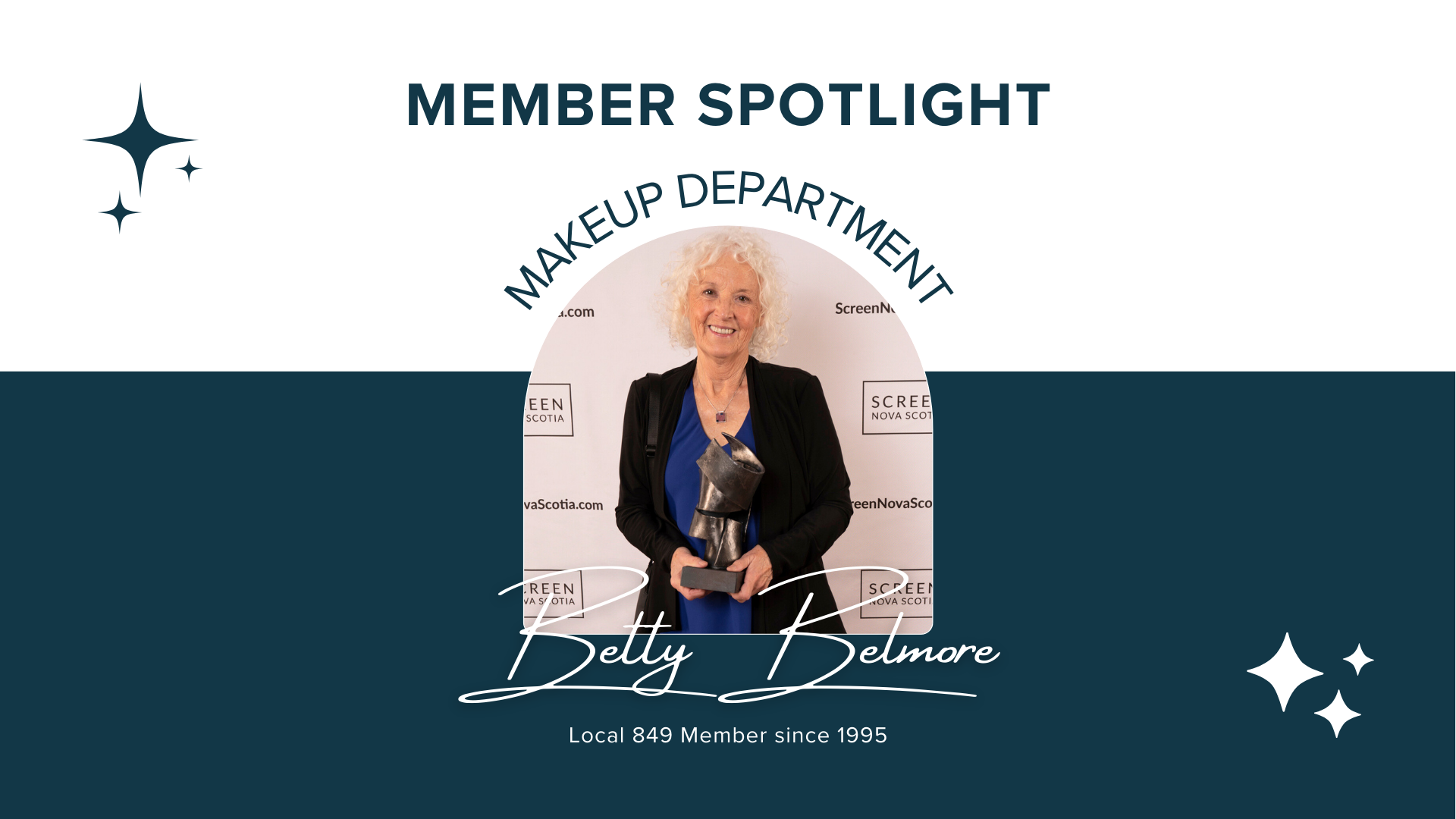
Betty Belmore discusses a day in the life of a Makeup Department HOD, how she began her film career, and why she values being a member of Local 849.
What is the role of the Makeup Department on a production:
Our role in Makeup is to help create believable characters. Once we read the script, we dig into our toolbox to find something creative and, most importantly, believable. Some people think of makeup as only making people look glamorous. That is very seldom the case. But whatever the look is, natural, older, younger, beaten up, beaten down, there is always the fun of using our imaginations while coming up with something convincing. We often provide other support to the actors which is not in our job description, such as being a sounding board and providing confidentiality and empathy. We get to be pretty good at reading the room.
What is the role of the HOD:
The Head of Department (HOD) works with the director, actors, and the Costume and Hair Departments to interpret the script and design appropriate looks for each character. A HOD oversees the department, delegating tasks, ensuring continuity and keeping a constant and open line of communication.
What does a day in the Makeup Department look like:
Besides knowing that you will be getting up early and putting in long hours, there’s not really a typical day. Just when you think everything is going smoothly, something is bound to change, so we always stay on our toes. The top of the day in the trailer is the busiest time. Once the actors are processed there will be as many of the team as possible on set to touch up the makeup throughout the day. Others may stay behind to continue processing and prep. At wrap we stay behind to clean up and ready the trailer for the next day.
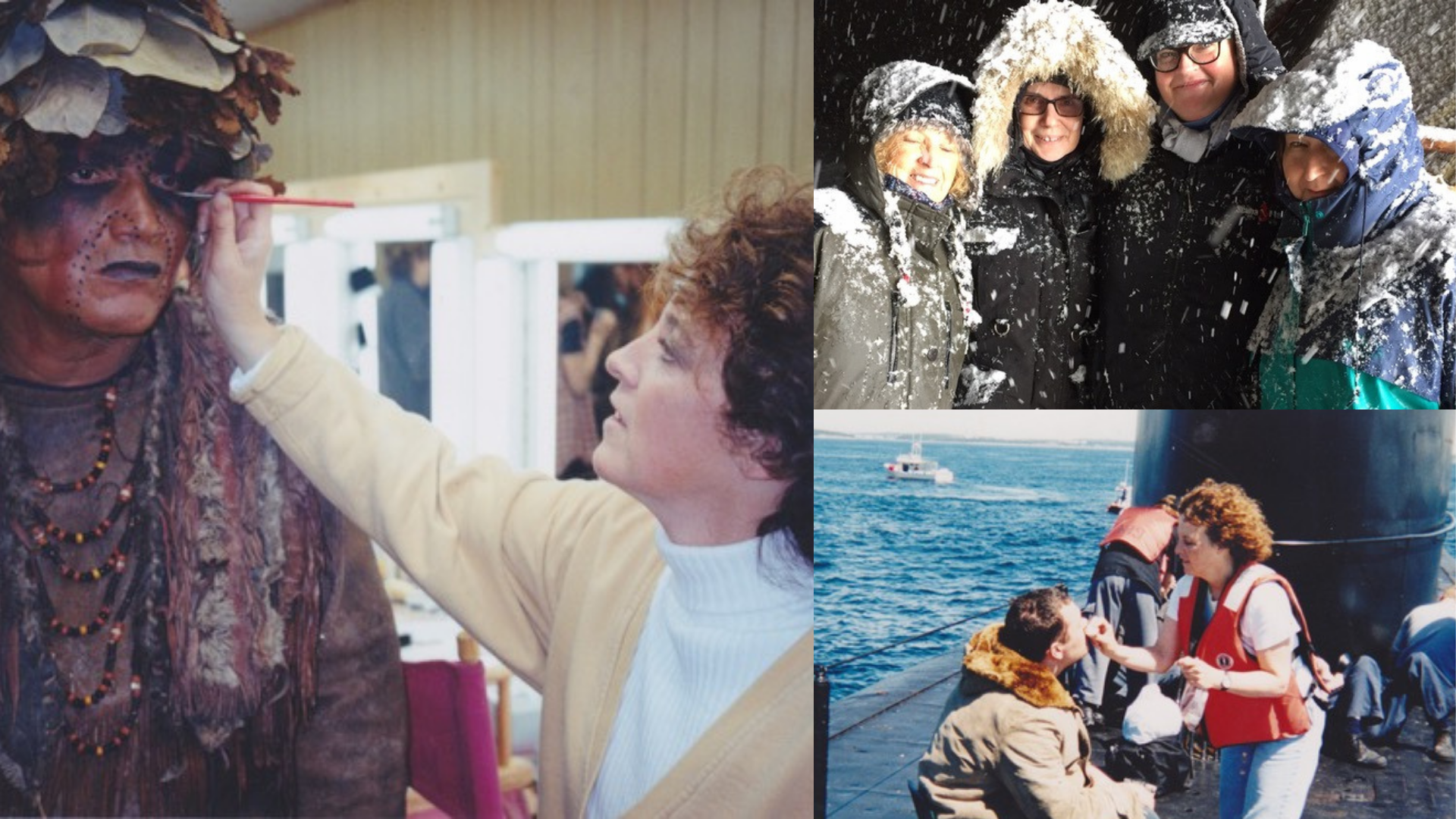 A selection of photos showcasing highlights from Betty Belmore's career. Left: The Scarlet Letter. Top Right: Frontier. Bottom Right: K-19: The Widowmaker.
How did you get started in film:
My start in film is not one I recommend nor one that would even be possible now. I spent a number of years as a singer in front of the camera. My friends were doing a TV show on ATV called Up Home Tonight and needed some help. I guess they thought the time I had spent in the makeup chair qualified me or, more likely, they were desperate. Anyway, I thought it sounded like fun. Lucky for me, the makeup artist on staff at CBC was an old friend and he gave me some basic information. Also, lucky for me, no one was judging and I was free to experiment and learn from my mistakes. At the time, in the early 80's, there were not a lot of people doing makeup for camera in the Maritimes. I began getting calls. We were all new together in the industry. Although I would have preferred to have a mentor and work as an assistant, I had to learn on my feet. It was sink or swim. There was a lot of sinking.
What does being part of Local 849 mean to you:
For anyone who has ever worked on a grueling, non-union shoot, you recognize the importance of some kind of security. Solidarity is not just a platitude, it’s a real thing. It has meant the world to me to know no matter how challenging a shoot can be, I will be out there with a great crew. We will have each other’s backs and we are united. It’s not something I take for granted and I am really proud of how our Union has grown, particularly with many young, enthusiastic members.
How has being a union member influenced your career:
When we first formed IATSE 849, I felt a sense of responsibility. We were not just representing ourselves anymore, we needed to be presented in the best possible light if we wanted to be recognized as a viable industry. I have felt a particular responsibility to the Makeup Department. Our members have worked over the years to strengthen it, create opportunities, and give guidance. I could not be happier with the way it has grown with talented, conscientious artists, whose skills far surpass my own. That is how it should be.
In 2023 you won the Screen Nova Scotia Crew Excellence Award; how did it feel to be recognized in that way by your peers:
First of all, it was a total shock to even be considered for the award, let alone be presented with it. Makeup is one of those departments that is often low key and sometimes invisible on set. Our names, if they are there at all, are buried in the credits. To be recognized by one’s peers is a humbling experience and I am completely honoured.
What are some other highs of your career? What are some of the challenges:
Challenges are often locations and weather related. Shooting a Christmas movie in July, trying to keep the actors from turning blue in January when it’s supposed to look like Tahiti, or applying eyeliner on a choppy sea; we all have our war stories.
The challenges often turn out to be the highs when you take the time to look around and think how special it is to be on board a submarine or up in the London Eye. I’ve been on the ice out on Frobisher Bay, had a right whale come alongside our boat on the Bay of Fundy, and watched a moose meander through a set in Newfoundland. It is a pretty cool job.
Solidarity is not just a platitude, it’s a real thing. It has meant the world to me to know no matter how challenging a shoot can be, I will be out there with a great crew. We will have each other’s backs and we are united.
What advice would you give to someone starting out in film:
My first advice would be to always remain open to learning new things. Secondly, (and this is something I have had to remind myself of many times) it’s only a movie; we’re not saving lives. Don’t let the job consume you because it can and it will if you let it. Your well being and family come first. Keep yourself healthy. When you are on set you will be looking after other people so like they say on the plane, give yourself the oxygen first.
What would you say you like most about working in film:
Hands down the people. I like the close friends I have made, the many, many people I have met, and had the privilege of working alongside.
What are some of your favourite looks you’ve created, styles you enjoy working with, productions that really meant a lot to you:
I have always enjoyed period productions and the research that is involved. One I am particularly proud of is the mini-series Trudeau from 2002. We followed Colm Feore as Trudeau along with over 90 actors through three separate eras and looks that ranged from the 60's into the 70's and old age. It was a constant back and forth with the makeup.
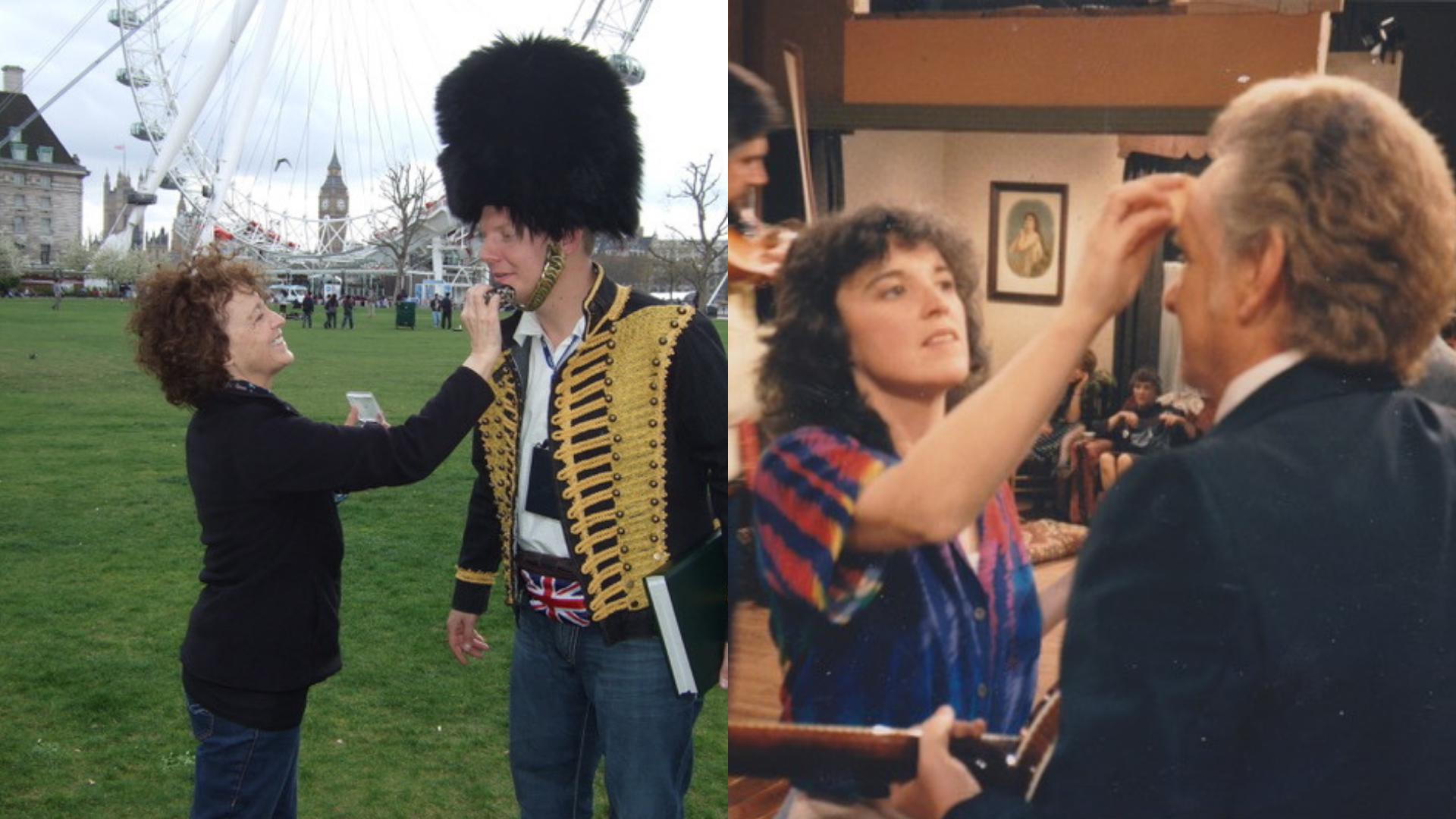 Left: Betty Belmore touching up Jonathan Torrens' makeup during a shoot in London, England. Right: Behind the scenes of Up Home Tonight, Betty works on bluegrass musician Ralph Stanley.
What do you do when you’re not on set:
I still write and sing when I can. I give workshops on the oral tradition of learning harmony by ear. I belong to a number of watchdog groups who meet regularly and actively respond to potential environmental threats to the province. I have seen first hand the negative social and ecological impacts from clear cutting and boom and bust industries so standing up for the environment is something that comes naturally.
I look after the Moose River Gold Mine Museum. My mother was a teacher, an historian, and a founder of the museum. My father was a goldminer and an underground rescue worker during the world-renowned cave-in of 1936 when three mine owners were trapped underground. The grueling 10-day rescue became famous because of the first live news coverage anywhere in the world. Over 100 million listeners tuned in to their radios every half hour for updates, making it the biggest news story of the first half of the 20th century.
What are some of the biggest changes you’ve seen over the course of your career:
The biggest change for me is in technology and communication. From forgiving 35 mm film (thank goodness for that starting out) to the harshness of HD, grainy polaroid cameras to digital and instant printing. I remember making a gazillion phone calls to find available products and waiting forever for them to come, never knowing exactly what you were getting. We used to have one set phone for all of us to use in emergencies. Now, cell phones are an extra appendage. I miss someone actually talking to me instead of texting. However, I am really grateful for map apps and GPS so I’m no longer stressed while looking for a location on those dark and early mornings.
What excites you about the future of film:
I’m excited for our sound stage, whenever it happens. I’m happy that there are young people who are choosing film as a career choice and want to stay here. We have stories to tell and they are one natural resource we can never deplete.